Europe’s Most Mountain-Loving Country
Slovakia is a small country of around 5.5 million people, located near the centre of Central Europe. Although it lies far from Japan, visiting it can bring an unexpected sense of familiarity. Perhaps that is because roughly three quarters of the country is mountainous, creating landscapes that can feel a little like Japan.
With geography like this, Slovaks love the mountains. On days off, they put on their backpacks and head into the forest with family and friends. According to Eurostat, Slovakia has the highest share in the EU of people who choose mountain destinations for their trips. Walking in the mountains is not an unusual hobby here but an everyday pleasure that extends naturally from daily life.
The Tatra Mountains, a Symbol of Slovakia
The clearest symbol of this relationship is the Tatra Mountains (Vysoké Tatry), which stretch along the border with Poland (Photo 1). Peaks rising to around 2,500 metres and glacial lakes form one of Slovakia’s best-known landscapes. Their special place in the country is evident in their appearance on the national flag, in the national anthem, and even on euro coins (Photo 2). The Tatras are about four hours by train from Bratislava. Mountain railways and cable cars make it possible to enjoy the landscape without undertaking a demanding climb (Photo 3). One easy route runs for about an hour through forest and along the lakeside from Štrbské pleso to Popradské pleso (Photo 4), and can be walked in sneakers. The Slovak word pleso means a glacial lake. After the walk, stopping for a break at a lakeside café is another characteristically Slovak way to enjoy the mountains.


The mountains are also close to urban life. The Little Carpathians (Malé Karpaty) rise behind Bratislava and are easily reached by city bus or chairlift (Photo 5). It is not unusual to begin the day with a light hike and then visit a winery. Along the southern slopes lies a wine-growing region with more than 2,000 years of history, and wine festivals are held throughout the area in autumn (Photo 6).


Croatia, the Slovak Sea
What do people from a mountainous, landlocked country do when they want to go to the sea? For many Slovaks, the answer is Croatia. In summer, families get into their cars and drive through Austria or Hungary and Slovenia towards the Adriatic. A drive of more than eight hours becomes part of the summer holiday memory. A seasonal night train even runs from Bratislava to Split, the historic Croatian city on the Adriatic coast, and Slovak police officers are sent to Croatia during this period. These details show just how familiar Croatia is as the “sea” for Slovaks.
There are also places to enjoy the water within Slovakia. Swimming is prohibited in the beautiful glacial lakes inside national parks, so many people instead visit artificial reservoirs (Photo 7). Around Banská Štiavnica, a World Heritage town that once prospered through silver mining, ponds originally built to store water for mining machinery are scattered through the landscape. Today they are busy with people swimming and boating (Photo 8).


The Luxury of Doing Nothing
No account of Slovaks’ love of nature would be complete without the chata, a holiday cottage (Photo 9). This is not a luxurious villa but a simple cabin in a natural setting. During the socialist period, when travel abroad was not easy, the government encouraged people to own such cottages, and many have since been passed down through generations. On Friday afternoons, people finish work and head for their chata. Many choose a quiet weekend in nature instead of a Friday night in the city. In Slovakia, the luxury of doing nothing can be found close to nature. When travelling through the country, it is worth going beyond the famous towns to the forests and lakes where people spend their weekends. There, time moves with a gentle rhythm that is distinctly Slovak.

Shogo Mashine
Born in 1990, Shogo Mashine lived in Slovakia for a total of seven years. His experience includes work at the Embassy of Japan in Slovakia and the Embassy of the Slovak Republic in Japan. His books include Czecho Janai Slovakia (Publib, 2024).
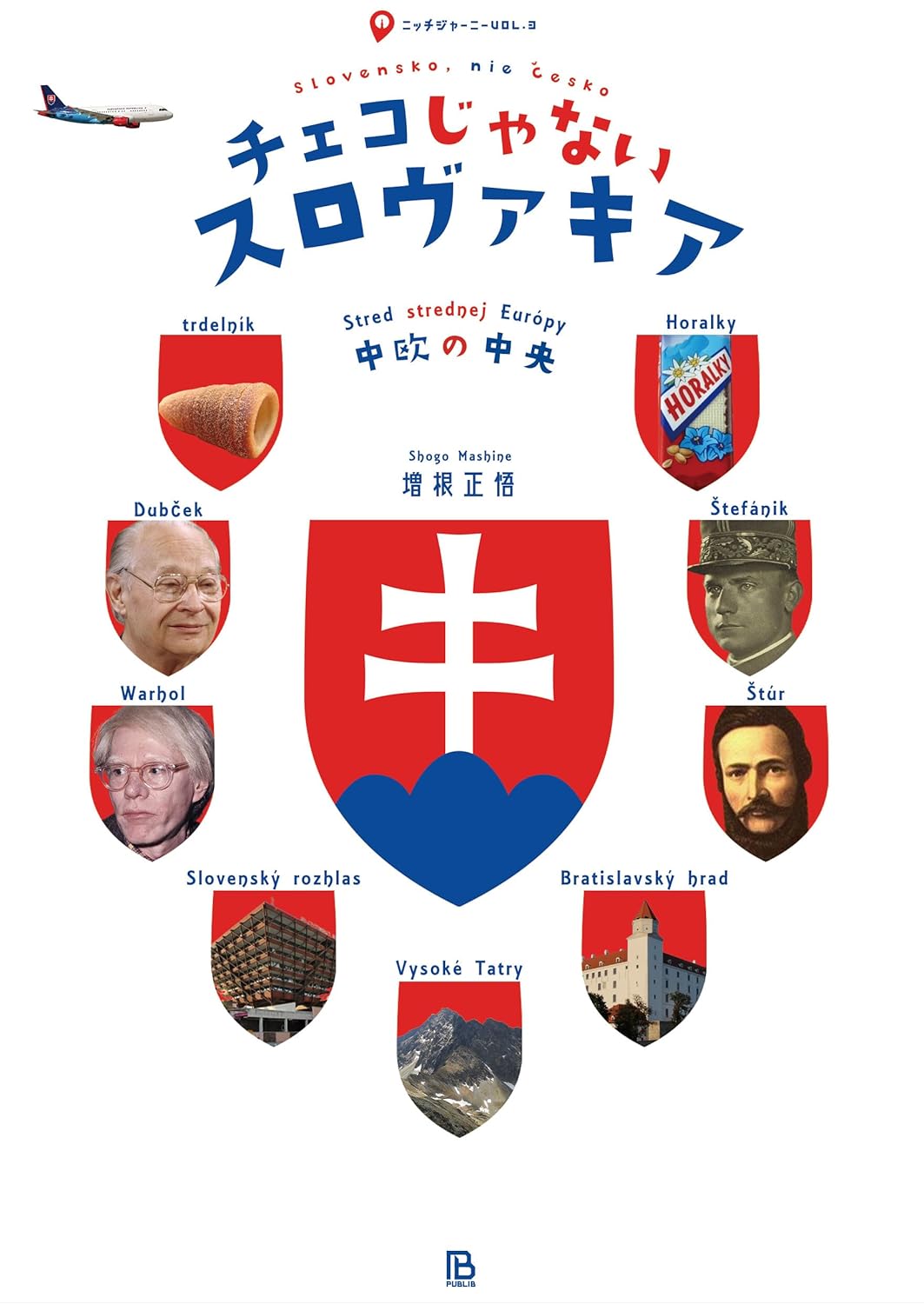
Book: Czecho Janai Slovakia
The author of this article, Shogo Mashine, has written a book about Slovakia. Readers who would like to learn more about the country’s history, culture, and everyday life can find it at the link below.