One of the pleasures of walking through a city while travelling is looking at its buildings. Not only the landmarks listed in guidebooks, but also an unassuming street corner or a seemingly ordinary view can hold the time through which the city has lived. Architecture may be a kind of time capsule containing a city’s memories.
A Gateway to the Middle Ages
Bratislava’s old town is the perfect place to step back in time. Pass through Michael’s Gate at its entrance and a townscape reaching back to the Middle Ages opens before you (Photo 1). The old town is pedestrianised, so you can walk at your own pace without worrying about cars.

It is also interesting to look up at the street-name signs. Sedlárska ulica, for example, leads to Main Square and takes its name from the saddlers (sedlár) whose workshops once lined the street. As you cross the cobblestones, imagining craftsmen and merchants walking the same route centuries ago suddenly gives the city another dimension.
At Main Square in the heart of the city, the Old Town Hall and the Embassy of Japan welcome you (Photo 2). In winter, the square fills with a Christmas market, and the scent of mulled wine drifts between the stone buildings. Many of the buildings around the square were once aristocratic residences. Today they house cafés, restaurants, and souvenir shops, but their placement and basic structures have changed little. Their uses have changed, yet the buildings themselves live on.

Many Periods in a Single City
Bratislava’s appeal is not limited to the old town. Walk a little beyond its medieval streets and architecture from entirely different periods appears in quick succession. The Blue Church, built in the early twentieth century (Photo 3), uses the Art Nouveau style then in fashion, with free, bright decoration shaped by abundant curves. By contrast, the Avion complex of the 1930s (Photo 4) is an orderly modern building with restrained ornament and is regarded as a masterpiece of functionalist architecture. Within a single city, architectural fashions turn as if you were leafing through the pages of a book.


A UFO and an Inverted Pyramid
During the socialist period, the cityscape became bolder still. Unusual structures appeared one after another, seemingly giving form to the era’s technical capability and fascination with the future.
Most SNP, the Slovak National Uprising Bridge over the Danube (Photo 5), is a leading example. Above the bridge’s distinctive structure, built without supports in the riverbed, floats an object resembling a UFO. It is, in fact, an observation deck and restaurant. Locals are thoroughly accustomed to it, but first-time visitors are likely to stop and stare.

The headquarters of Slovak Radio (Photo 6) towers over the city like a giant inverted pyramid. To someone seeing it for the first time, it may feel less like a building than an enormous object, or perhaps the set of a science-fiction film.

Medieval streets, an Art Nouveau church, and an inverted pyramid: in Bratislava, architecture from different periods coexists with surprising ease.
Everyday Life Across Layers of History
What sort of homes do ordinary people in Bratislava live in? South of the Danube, across from the old town, enormous housing estates were constructed in the Petržalka district during the socialist period (Photo 7). Nearly 100,000 people—just under a quarter of the city’s population—still live in this vast residential area.

The word “housing estate” may evoke an ageing post-war landscape, but many of the buildings have been properly renovated and can be surprisingly comfortable. As one reference point, a property website listed a renovated three-room apartment of 72 square metres for €240,000, or about ¥44 million (Photo 8).

Compact Bratislava offers a way of life largely free from long journeys. From the old town to the housing estates of Petržalka takes about fifteen minutes by city bus, crossing the UFO bridge along the way. From medieval cobblestones to socialist-era apartment blocks, an ordinary journey through Bratislava becomes a small trip across layers of history.
Shogo Mashine
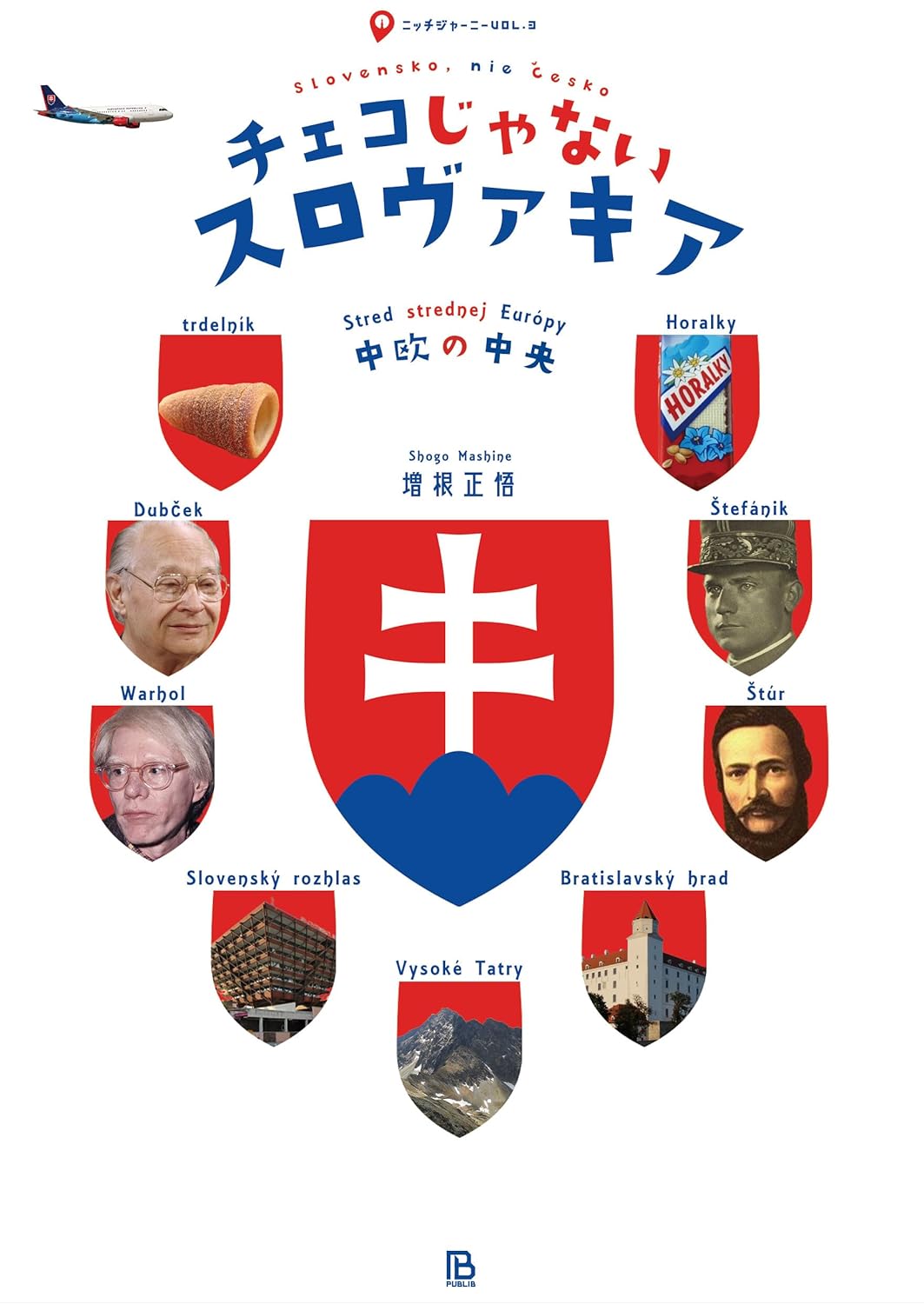
Born in 1990, Shogo Mashine lived in Slovakia for a total of seven years. His experience includes work at the Embassy of Japan in Slovakia and the Embassy of the Slovak Republic in Japan. His books include Czecho Janai Slovakia (Publib, 2024).
Book: Czecho Janai Slovakia
The author of this article, Shogo Mashine, has written a book about Slovakia. Readers who would like to learn more about the country’s history, culture, and everyday life can find it at the link below.